Saturday, October 29, 2011

*Winter Business Hours*

Just a reminder-
Starting November 1st, we'll be switching over to our Winter Business Hours:

Wednesday    8:00am - 4:30pm
Thursday        8:00am - 4:30pm
Friday            8:00am - 4:30pm
Saturday        8:00am - 4:30pm
Sunday          CLOSED
Monday         CLOSED
Tuesday         CLOSED

**Don't forget - Our website is up and running 24/7!  
Submit a shopping request from our live inventory anytime of day or night! www.gardenworldonline.com

Friday, October 28, 2011

Evergreens for the Landscape

We love these new arrivals for their winter value - adding a fresh burst of evergreen foliage to any area!  Many of them are excellent groundcovers- Read on and find the best choice for your landscape:


1. Blechnum spicant  (Deer Fern)
This fern's unique lance-shaped dark fronds make it an eye-catching addition to any shaded area.  This Pacific Northwest native is also deer resistant - always a plus in a woodland garden!


2. Vinca minor (Periwinkile)
This evergreen groundcover, with shiny dark foliage displays pretty blue blooms from spring through summer. It's a fast grower - a great choice for a shaded area that needs some quick coverage.


3. Liriope muscari 'Silvery Sunproof' (Silvery Sunproof Lily Turf)
With bright striped foliage, this Liriope shines in sun - shade.  Purple flower spikes appear in summer. Also, a deer resistant winner!


4. Vinca minor 'Ralph Shugert'  (Ralph Shugert Lily Turf)
This evergreen groundcover forms mats of white-edged, dark green foliage.  It's purplish blue flowers contrast nicely with the dark foliage.  Also, a quick spreader - great for fast coverage!

5. Arctostaphylos uva-ursi 'Wood's Compact' (Wood's Compact Kinnikinnick)
This evergreen groundcover is one of the most shade tolerant kinnikinnicks.  A great pick for areas under oaks and other trees.  Also, an excellent groundcover for coastal conditions!

6. Ophiopogon japonicus 'Silver Mist' (Variegated Mondo Grass)
This compact growing grass displays eye-catching variegated leaves.  An excellent casual groundcover in between stepping stones or borders.  Also a great groundcover for rock gardens-  even tolerates light foot traffic!

7. Liriope muscari 'Big Blue' (Big Blue Lily Turf)
Evergreen grass-like plant with nice green shiny foliage and lovely lavender hyacinthi-like spikes of flowers in summer.  Perfect in mass plantings under trees or in narrow beds and borders.  Great in containers!

Thursday, October 27, 2011

Japanese Maple Q & A

Fall is not only the perfect time to plant, but it's also an amazing time to appreciate the fall color of Japanese Maples.  Today, we're going over some of the most commonly asked planting and care questions.  

"What colors will they turn in fall?"
Japanese Maples are well known for their excellent display of fall color. Most Japanese Maples display green or red foliage throughout the season, then transition to beautiful reds, yellows, oranges, purples, pinks, creams, greens, and more in the fall - the stunning palette combinations are almost endless!

From left to right: Acer shirasawanum 'Palmatifolium', Acer palmatum 'Amber Ghost',
Acer palmatum 'Alpenweiss',  Acer palmatum 'Elmwoodie'


"How tall will they get?"
The mature height and spread depends on species and variety.  They can range anywhere from 3' - 25' at maturity.  If you're looking for a smaller tree, your best bet is one of the smaller varieties.  Some of our favorites are Acer palmatum 'Cynthia's Crown Jewel' & Acer palmatum 'Shaina'. If you're looking for a larger addition to the landscape, there are many options as well! Some of the popular larger Maples include Acer palmatum 'Purple Ghost' & Acer palmatum var. dissectum 'Seiryu'.

"What type of soil will they need?"
Japanese Maples require a moist/ well drained soil.  If you're working with a heavy soil with poorer drainage, plant the tree on a berm.  

"How big of a hole should I dig?" 
When planting, dig a hole twice the size of the container, making sure the top of the root ball is exactly level with the soil.

"How much sun/shade do they need?"
Japanese Maples with yellow or variegated leaves require afternoon shade.  Be sure to provide them with protection from the hottest part of the day.  Avoid planting next to the south or west side of the house.  Most Japanese Maples with darker green or purple foliage do best in full sun.

For further reading, check out this book: "Timber Press Pocket Guide to Japanese Maples".  We highly recommend this book, and always keep a copy here at the nursery for reference.  It's full of excellent pictures, and useful info!

Thursday, October 6, 2011

Fall Color in the Landscape

Fall color is beginning to arrive! In celebration of all the vibrant tones this season brings, we’ve put together a list of our autumn favorites.  Enjoy!


Hamamelis x intermedia ‘Arnold’s Promise’
Deciduous, upright, vase-shaped tree with ascending branches. Large, broad leaves are green in the spring and summer, and turn yellow-orange to yellow in the fall. Strappy yellow flowers delight us from February to March.


Stewartia pseudocamellia
Deciduous tree with attractive exfoliating gray, red and orange bark for winter effect. White camellia-like flowers all summer, and fall color ranging from yellow to red and scarlet.


Itea virginiana ‘Henry’s Garnet’
Deciduous, rounded, arching shrub with a dark green glossy foliage turning brilliant scarlet in fall. Leaves hold late into the fall for a long display of color. Summer flowers are white, fragrant, and held in pendulous racemes.


Cornus sericea ‘Hedgerow’s Gold’
Upright, deciduous shrub with variegated gold and green leaves, red stems, and creamy white flowers in the spring. Foliage turns beautiful shades of pink and purple in the fall.


Hydrangea quercifolia ‘Pee Wee’
Deciduous, compact dwarf shrub.  Blooms from mid summer - fall.  White flowers transition to a red as they mature.  Green foliage also turns to a burgundy-red in fall.


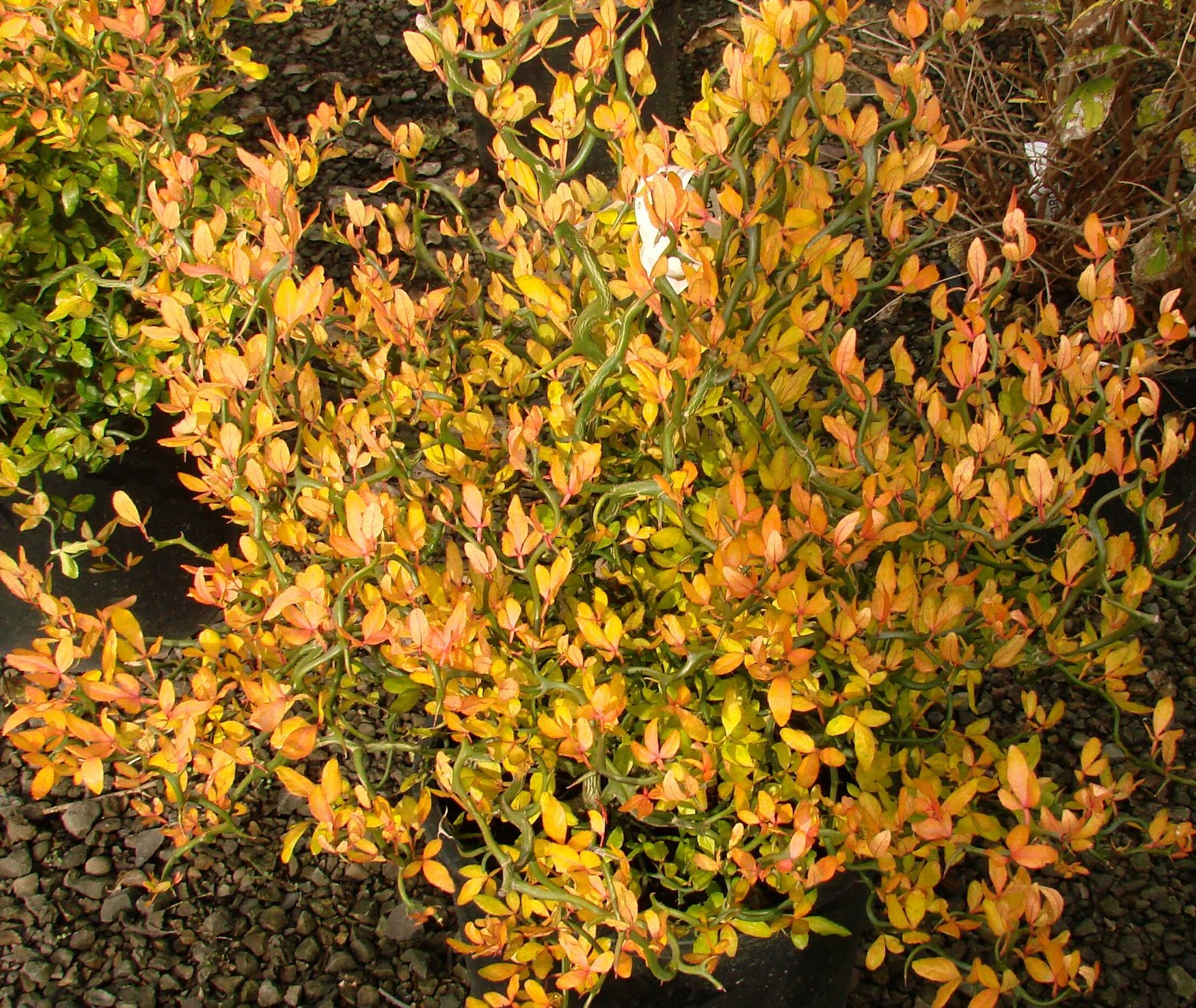
Poncirus trifoliata var. montrosa ‘Flying Dragon’
This hardy Japanese orange produces white fragrant flowers in late spring to early summer. Flowers are followed by small, orange-like fruits. Interesting, twisty stems have thorns and trifoliate green leaves. Older stems can show some white striations along with the green. Foliage turns a stunning combination of orange and yellow in the fall.


Friday, September 30, 2011

Ornamental Grasses for the Fall Palette

Pennisetum alopecuroides 'Hameln'
Hameln Fountain Grass
This dwarf cultivar of fountain grass displays
white flowers, resembling a bottle brush.
Bright green foliage transitions to a golden
brown color in fall.


The weather has brought us that crisp autumn breeze, and the gorgeous tones of the fall season are beginning to arrive. Nothing says autumn like the combination of striking warm colors with a wisp of soft texture in the garden. From feathery seedheads, to bold and vibrant color, ornamental grasses provide a versatile appeal in any landscape.

Ornamental grasses are known for their ease and low maintenance. Many grasses are also drought tolerant, as well as disease and deer resistant.  They’re also known for their year round addition of movement to the garden. Even the smallest of breezes animates their foliage, and in fall, their seedheads.  

They’re also regularly praised by landscape designers for their architectural value and four-season interest. After many plants have begun to transition into winter dormancy, grasses continue to provide a distinct texture and form in the winter landscape.  Though most ornamental grasses die back in the winter, their dormant foliage and seedheads remain as a focal point in the landscape.  They are exceptionally beautiful when covered in winter frost.  Most grasses can be cut back in late winter, then return with new growth in the spring.

Ornamental grasses can be incorporated into almost any landscape. Grasses make excellent borders, backdrops, accents, container plantings, and even mass plantings.   Don’t forget: seedheads and foliage are even excellent additions to floral arrangements!

Check out our Live Inventory - 30% OFF All Ornamental Grasses!


Grasses for Borders & Edging:

Grasses for Shade:

Grasses for Accents:


Saturday, September 24, 2011

Drying Hydrangea Blooms


Drying Hydrangea blooms is an excellent way to savor the charming color of your garden. The natural appeal of finely muted pastels makes a wonderful addition to the home.  Some of our favorite uses are vase and basket arrangements, wreath displays, and easy gifts for friends!  Follow these simple directions, and start bringing the joy of your landscape indoors.
The key to drying Hydrangeas is cutting them at the appropriate time.  If blooms are cut while they are still retaining too much moisture, they will not dry properly.  From August - October, watch for the blooms to begin drying on the plant.  You'll see the color of the blooms begin to fade, and they'll begin to transition to a more papery texture. This is the time when they're ready to be cut.
Cut blooms with about a 12" stem, and remove all leaves.  Blooms can then be placed in a vase with or without water.  Be sure to keep the vase out of direct sunlight, which could significantly diminish the saturation of the blooms.  Blooms can also be hung upside down to dry, or can be dried using silica gel.
Then, enjoy!
Don't forget to check out our Live Hydrangea Inventory - They're all 30% OFF, just in time for the drying season!

Friday, September 23, 2011

Fall is for Planting (...and Saving $$!)

"When is the best time to plant?" - It's one of the most common questions asked at the nursery.  Fall is an excellent season to tackle planting projects.  Planting in fall allows plants time to establish and extend their roots throughout the winter.  Though they may not be visually displaying their growth, it's important to recognize the processes occurring beneath the ground. Establishing a healthy root zone is essential to a plant's vitality and success within the landscape. When spring arrives and plants begin to display new growth in it's top zone, it will have a well established root structure to anchor it within the ground.
Fortunately, from an economical perspective, it's also a great time to purchase plants and take advantage of seasonal sales.  Right now, we're running our Fall Sale-
For sale pricing and availability, check out our live inventory: 
30% OFF ~ All Shade & Flowering Trees (excluding Japanese Maples), Edible Fruit Trees, Perennials, Hibiscus, Phormium, Blueberries, Vines, Bamboo (excludes Nandina), Hydrangeas, All Pottery, Statuary, & Fountains